Virtual Numbers for Online Verification and Account Security
Why services ask for a phone number, which virtual numbers actually work on major platforms, and how to avoid losing access to accounts you care about.
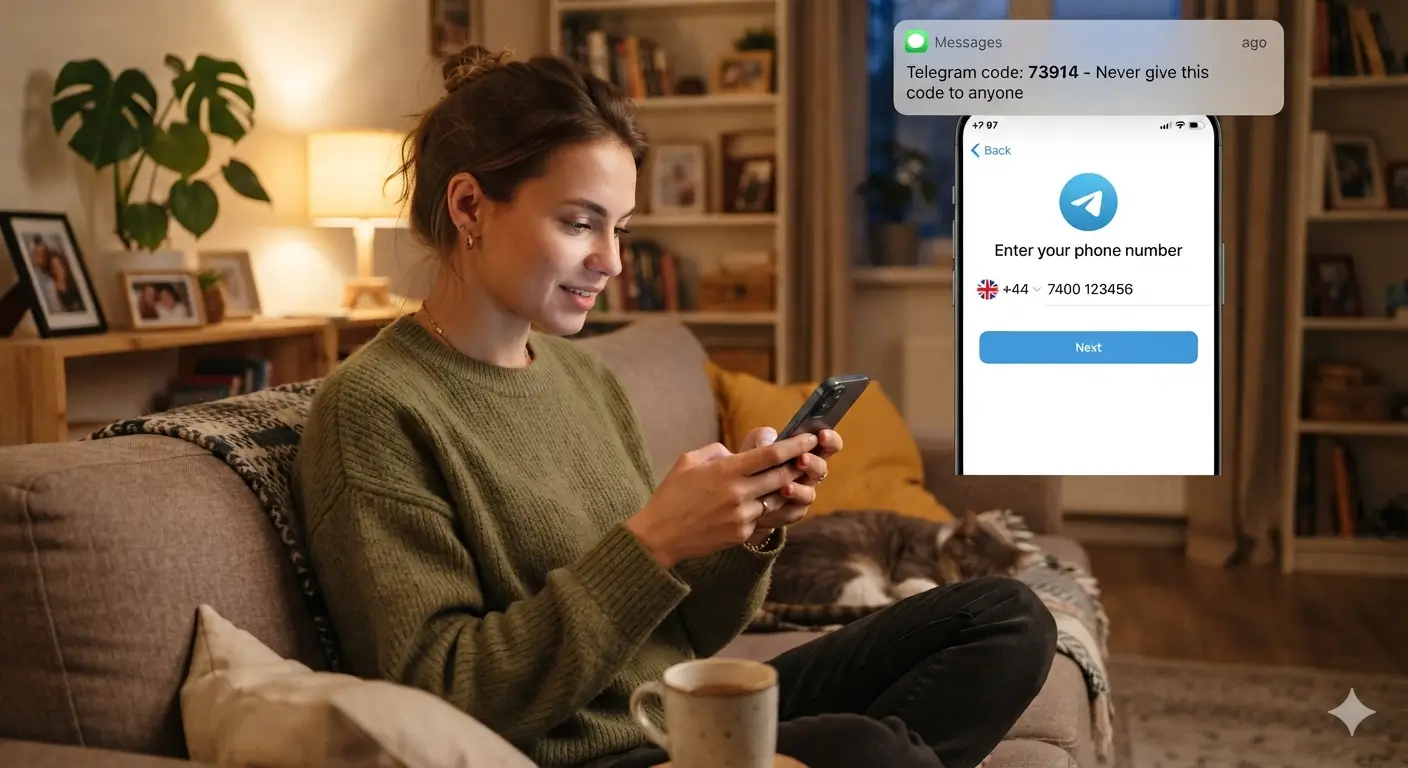
It's hard to find a service today that doesn't ask you to confirm a phone number. Sign up for a messaging app - it asks for a number. Create an account on a marketplace - it asks for a number. Turn on two-factor authentication on a social network - a number again. Naturally, many users start to wonder: do you really need to hand over your personal number to every website, or can a virtual number do the job instead.
This article covers why services require phone verification in the first place, which virtual numbers work best for different platforms, what the difference is between one-time and long-term numbers and why it matters, plus the most common mistakes people make when verifying with a virtual number.
Why Services Require Phone Verification (SMS, Calls, 2FA)
At first glance, requiring a confirmed phone number can look like pure formality. In reality, there are several concrete reasons behind it.
- 🤖Protection against bots and fake accounts. An email address can be created for free, in unlimited quantities, in a few seconds, which is why bots mass-register email accounts for spam and fake activity. A phone number doesn't work that way: it costs money and is much harder to scale. That's why SMS verification remains one of the most effective filters against fake registrations.
- 🔐Two-factor authentication (2FA). A password is something you know, and it can leak through a breached database, phishing, or brute force. A phone is something you physically have. When a service requires an SMS code in addition to a password, breaking into an account becomes significantly harder: an attacker would need access to both the password and the phone at the same time.
- 🪪Identity verification. Banks, dating apps, crypto exchanges, and fintech platforms need more than just filtering out bots - they're required to tie an account to a real person for legal and compliance reasons. That's why, alongside phone verification, these platforms often add a KYC check: documents, a selfie, sometimes a video call.
- 🔑Account recovery. Forgot your password, or got locked out due to suspicious activity? A phone number remains the fastest way to prove to a service that you're the account owner and get a reset code.
Virtual Numbers for Social Networks, Messengers, and Marketplaces
Not all services treat virtual numbers the same way, and it's worth knowing this before you buy one.
One-time vs Long-term Virtual Numbers
This is arguably the most important section of the article, since it's where users make mistakes most often and end up losing access to their accounts.
- Shared between many users in rotation
- Can be passed to someone else within a minute
- Re-verification codes may reach a stranger
- Frequently blocked by platforms
- Not suitable for long-term accounts
- Reserved exclusively for you for the whole period
- Never assigned to anyone else while in use
- Renewable an unlimited number of times
- 10-day grace period after expiry
- Stays in reserve for several months more
One-time numbers: convenient, but risky
Many free and cheap "receive SMS online" services work on a simple principle: the same number gets handed out to different people in rotation. A code is received, and within a minute that same number is passed on to the next user.
For a one-off email confirmation, that's fine. But if such a number gets tied to an account you plan to use long-term - a social network, a bank, a messenger - there's a real risk that someone else ends up with access to your account. As soon as the service needs to re-verify the number, which it eventually will, the code may land in a different person's hands. Recovering access at that point becomes very difficult.
Long-term rental: the option worth choosing
We specifically offer long-term number rentals, starting from one month. The difference is fundamental: the number is reserved exclusively for the renter for the whole rental period and can't be assigned to anyone else while you're using it. It can be renewed an unlimited number of times, so the number can stay yours for as long as you need.
Even if a rental period lapses - say, you forgot to renew in time - the situation isn't critical:
- ✓for 10 days after the rental ends, a grace period applies, during which the number can be restored on a priority basis and is guaranteed not to go to another client;
- ✓after that period, the number doesn't go straight back into the general sales pool - it stays in reserve for several more months. It can often still be restored during that time as well; it's best to check the current status with support.
Security and Privacy Benefits of Using Virtual Numbers
Beyond verification itself, virtual numbers come with a broader set of privacy and security benefits.
Common Mistakes When Using Virtual Numbers for Verification
Even knowing all of the above, people regularly make the same mistakes. Here are the most common ones, and how to avoid them.
The mistake is tying a free number from a "receive SMS online" service to a Google account, a banking app, or a social network you plan to use for years. Once the number goes back into the general pool, which it inevitably will, you risk losing the ability to recover the account altogether.
An expired card on file, a missed notification, or plain forgetfulness - and the number subscription quietly lapses. Such numbers get recycled fairly quickly. In the worst case, someone else gains access to your account through that number; in the best case, you simply can't get a login code.
Not every virtual number works equally well on every service. Platforms often have their own geographic restrictions: for example, local US numbers don't work for WhatsApp registration, while some Swiss marketplaces only accept Swiss numbers.
The temptation is understandable: why buy several numbers if one can verify a couple of accounts at once. In practice, this almost always ends badly. Platform anti-fraud systems are very good at matching numbers to accounts, and as soon as they detect the same number on multiple profiles, it gets flagged as suspicious activity - potentially leading to all linked accounts being blocked at once. On top of that, if account recovery via SMS is needed later, the system can't reliably determine which account the code belongs to, which creates further confusion.